
Augustin F. C. Holl
Introduction
The United States aggression against the Islamic Republic of Iran has brought to the fore the claim of the exiled son of the deposed Shah of Iran, who called himself “Prince” with claims on the throne of Iran his father lost in the aftermath of the Islamic revolution in 1979. In less than 3 generation, a Cossack military officer launched a coup with the backing of the British, initiated a ruling dynasty – the Pahlavi Dynasty – out of thin air, that became a strong ally of the West during the Cold war. Inspired by Kemal Ataturk reformist policies in Turkiye, Mohammad Reza Pahlavi, the Shah of Iran who ruled the country from 1941 to 1979 launched an iron-fist modernization of the country that triggered his overthrow in 1979 by the exiled Ayatollah Ruhollah Khomeini. Here is a brief history of the Pahlavi Dynasty in two parts by Chapour Ghasemi (2004)
Brief History of the Iran Pahlavi Dynasty I
Reza Khan, Pahlavi
By Shapour Ghasemi 2004
(Revised 2013)
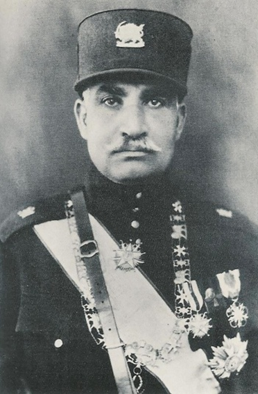
Reza Khan, later known as Reza Shah Pahlavi, was born in 1878 in the village of Alasht in the Savadkouh region of Mazandaran province. At the turn of the century, Alasht was a relatively isolated rural settlement with a population of approximately one thousand inhabitants. His father, Abbas Ali, served in the Savadkouh provincial regiment and is believed to have attained a rank roughly equivalent to that of major. Around 1877, Abbas Ali married his second wife, Noush Afarin, a Persian-speaking woman whose father had migrated to Iran from Erivan. Reza was born the following year, in 1878. Abbas Ali died within three to six months of his son’s birth, leaving the family in modest circumstances. Following her husband’s death and amid tensions with his other wife and children, Noush Afarin relocated to Tehran at the urging of her younger brother. Reza thus spent much of his formative years in the capital, where he would eventually embark upon a military career. At approximately sixteen years of age, Reza joined the Persian Cossack Brigade, 1893–94, a force that would later prove central to his political ascent. In 1903, at the age of twenty-five, he reportedly served as a guard, servant, and horse-groom to the Dutch consul general, Fridolin Marinus Knobel. Around the same time, he married Tajmah of Hamadan. The couple had one daughter, Fatemeh, later known as Hamdam al-Saltaneh, but the marriage ended in divorce shortly after the child’s birth.
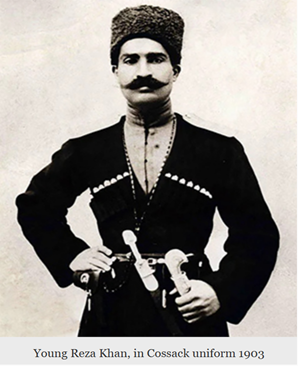
Reza Khan’s advancement within the Cossack Brigade was gradual but steady. In 1911, serving under Abol Hossein Mirza Farman Farmaian, commonly known as Farman Farma, he participated in military operations against Salar al-Doleh, who sought to overthrow the government in Tehran and restore his brother, Mohammad Ali Shah Qajar, to the throne. Reza distinguished himself in these campaigns and was promoted to First Lieutenant. His proficiency in operating machine guns contributed to his elevation to a rank equivalent to Captain in 1912. By 1915, he had acquired a reputation as a disciplined and capable officer and was selected for important military assignments by senior commanders. That same year, he attained the rank of colonel. His growing prominence within military circles brought him into contact with influential political figures in Tehran and the provinces.
In 1916, Reza married Nimtaj, Taj al-Molouk, daughter of Teymour Khan Ayromlou, a brigadier general in the regular army whose family had migrated from the Caucasus following the Russo-Persian War of 1828. This marriage strengthened Reza’s social and political connections. The couple had four children, including the future monarch Mohammad Reza Pahlavi, as well as Shams, Ashraf, the Shah’s twin sister, and Ali Reza.
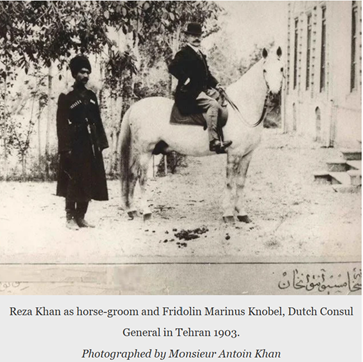
By 1918, Reza Khan was referred to as a brigadier general during Cossack operations in the Kashan region against local insurgents. His decisive entry into national politics occurred in February 1921, when he led a coup d’état that resulted in the occupation of Tehran. Although British strategic interests facilitated the coup, Reza rapidly consolidated authority. He was appointed Minister of War and later oversaw negotiations for the withdrawal of Russian forces from Iranian territory. In 1922, he married Turan, Qamar al-Molouk, Amir Soleimani, 1904–1995, daughter of Issa Majd al-Saltaneh, a prominent aristocrat. The marriage produced one son, Gholam Reza, before ending in divorce in 1923. That same year, Reza Khan became Prime Minister. He subsequently negotiated the evacuation of British forces stationed in Iran since the First World War. Also in 1923, he married Esmat Dowlatshahi, daughter of Qajar prince Mojalal al-Doleh. This union produced five children: Abdol Reza, Ahmad Reza, Mahmoud Reza, Fatemeh, and Hamid Reza. From the beginning of Reza Khan’s appointment as Minister of War, tensions developed between him and Prime Minister Zia-ol-Din Tabatabaee. By 1923, Reza Khan had largely succeeded in securing Iran’s interior from remaining domestic and foreign threats. Observers, including members of parliament, increasingly recognized that he, not Zia-ol-Din Tabatabaee, wielded effective political power. Upon his return to the capital, he was formally appointed Prime Minister. He quickly formed a cabinet in Tehran to implement his program of modernization and reform
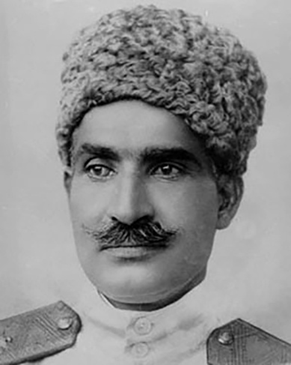
By October 1925, Reza Khan orchestrated the deposition of Ahmad Shah Qajar, thereby terminating the Qajar dynasty. Initially, he had planned to declare Iran a republic, following the example of Mustafa Kemal Atatürk in Turkey, but he abandoned the idea in the face of British opposition and resistance from the clergy. The Majlis, convened as a constituent assembly, declared him Shah of Iran on 12 December 1925. He adopted the dynastic name “Pahlavi,” thereby founding a new ruling house; the Pahlavi Dynasty was thus established.
Reza Shah’s reign, 1925–1941, was characterized by an ambitious program of state-building and modernization. He declared that his rule would be free from excessive clerical influence, nomadic uprisings, and ethnic fragmentation, while promoting European-style educational institutions, expanded public roles for women, and modern economic structures that included state factories, communication networks, investment banks, and department stores. He reorganized the armed forces, centralized administrative authority, reformed fiscal structures, and curtailed foreign concessions that had previously limited Iranian sovereignty. Major infrastructure projects, including the Trans-Iranian Railway, were undertaken to promote economic integration and national consolidation. Educational reforms expanded secular schooling and culminated in the establishment of the University of Tehran in 1934. The state also sponsored the systematic dispatch of students to Europe for advanced study.
Despite these reforms, Reza Shah’s rule became increasingly authoritarian. Political dissent was suppressed, parliamentary authority was weakened, and power became concentrated within the monarchy. He discredited and removed a number of ministers. Abdolhossein Teymourtash, Minister of the Imperial Court, was accused of corruption and conspiracy, dismissed in 1932, and died under suspicious circumstances in prison in September 1933. Prince Firouz Nosrat-ed-Dowleh III, Minister of Finance and a key figure during the early years of his reign, was convicted on similar charges in May 1930 and died in prison in January 1938. Ali-Akbar Davar, Minister of Justice, faced similar suspicions and committed suicide in February 1937. As his reign consolidated, Reza Shah increasingly confronted Iran’s clergy and segments of the devout Muslim population over religious and social policy. In March 1928, he entered the sanctuary of the Fatima Masoumeh Shrine in Qom and physically confronted a cleric who had reprimanded his wife the previous day for appearing with her face partially uncovered while on pilgrimage.
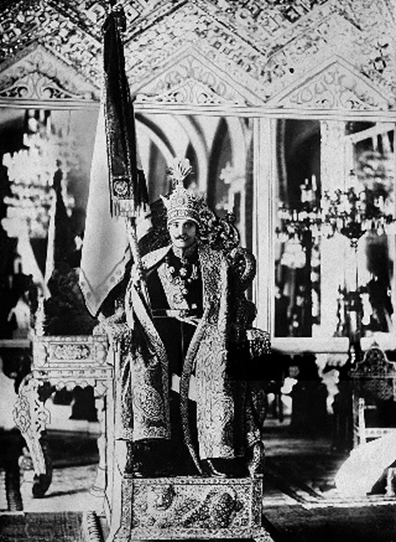
In December 1928, the government enacted a dress law requiring most men, except Shia jurisconsults who passed a qualifying examination, to wear Western-style clothing. The Shah also promoted changes in women’s dress, encouraging the abandonment of the hijab and prohibiting female teachers from wearing head coverings in schools. In addition, several religious madrasas were brought under state control. The Marvi Madrasa in Tehran was converted into an art college, “Honar Kadeh,” where André Godard and Maxime Siroux were among the instructors. During the reign of Mohammad Reza Shah, the second Pahlavi monarch, the art college was later relocated to the Faculty of Engineering at the University of Tehran, and the Marvi Madrasa was returned to clerical administration. Women were permitted to enroll in the faculties of law and medicine, and in 1934 legislation imposed fines on cinemas, restaurants, and hotels that refused service to both men and women. By the mid-1930s, these reforms had generated significant opposition among members of the Shia clergy
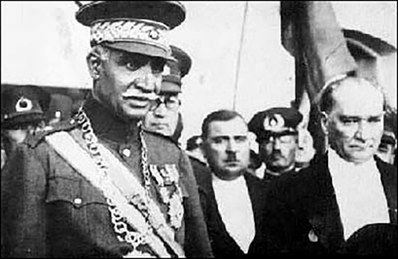
In 1935, unrest occurred at the Imam Reza Shrine in Mashhad following sermons criticizing the Shah’s reforms, state policies, and taxation measures. Groups of bazaar merchants and rural residents gathered in the shrine precinct, reportedly chanting slogans comparing the Shah to Yazid, a historical figure viewed negatively in Shia tradition. Local security forces initially refrained from entering the shrine. The confrontation ended when military units from Iranian Azerbaijan intervened, resulting in dozens of deaths and hundreds of injuries. The incident marked a further deterioration in relations between the monarchy and segments of the clergy. Subsequently, the government expanded its dress reforms through the Kashf-e hijab decree, which prohibited the chador and required women to appear in public without traditional head coverings. On 21 March 1935, Reza Shah issued a decree requesting that foreign governments use the term “Iran” instead of “Persia” in formal correspondence, reflecting a broader nationalist orientation.
In 1938, Reza Shah completed a 1,392-kilometer railway connecting the Persian Gulf to the Caspian Sea. Constructed with foreign technical assistance, the project was economically costly and strategically controversial. Some critics argued that an east–west railway system would have been more economically and strategically justifiable.
On the eve of the Second World War, Germany had become Iran’s largest trading partner. The German government agreed to provide the steel factory that Reza Shah considered essential for modernization. However, part of the heavy machinery was seized by the Allies after the outbreak of war and never reached Iran.
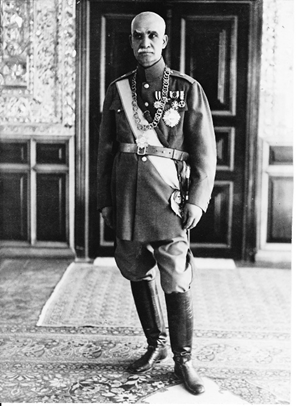
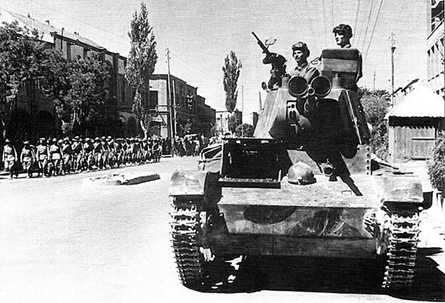
During World War II, Reza Shah’s limited rapprochement with Germany aroused suspicion among the Allied powers. In August 1941, the United Kingdom and the Soviet Union invaded and occupied neutral Iran in a coordinated air, land, and naval assault without a formal declaration of war. Reza Shah ordered the resignation of Prime Minister Ali Mansur and replaced him with former Prime Minister Mohammad Ali Foroughi. Foroughi, who had previously been forced into retirement for political reasons, entered into negotiations with the British. Rather than seeking to preserve Reza Shah’s position, he signaled that political transition might facilitate Allied withdrawal. The British and Foroughi agreed that, for Allied forces to withdraw, Iran would have to expel German diplomats and close Axis legations. Remaining German nationals were to be handed over to Allied authorities. Reza Shah resisted the final demand and instead arranged for the secret evacuation of many German nationals. By 18 September, most had escaped through the Turkish border. In response to Reza Shah’s defiance, the Red Army advanced to occupy Tehran on 16 September. Fearing instability and possible reprisals, many residents, particularly members of the wealthy classes, fled the city. Reza Shah, in a letter prepared by Foroughi, announced his abdication. Crown Prince Mohammad Reza Pahlavi subsequently took the oath as Shah of Iran.
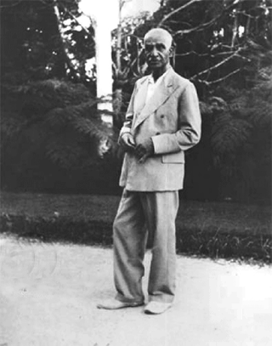
Following his abdication, British forces transported Reza Shah and several members of his family to Mauritius. He was later transferred to Durban and subsequently to a residence in the Parktown district of Johannesburg, South Africa, where he died on 26 July 1944 at the age of sixty-six from a heart ailment.
Bibliography
Abrahamian, Ervand. A History of Modern Iran. Cambridge: Cambridge University Press, 2008.
Ansari, Ali M. Modern Iran Since 1921. London: Pearson Education, 2003.
Cronin, Stephanie. The Army and the Creation of the Pahlavi State in Iran, 1910–1926. London: I.B. Tauris, 1997.
Ghani, Cyrus. Iran and the Rise of Reza Shah: From Qajar Collapse to Pahlavi Power. London: I.B. Tauris, 1998. Milani, Abbas. The Shah. New York: Palgrave Macmillan, 2011.
A Brief History of the Pahlavi Dynasty II
The Pahlavi Dynasty
By Shapour Ghasemi 2004
Revised 2018
Between 1925 and 1941, Iran experienced rapid urbanization and industrialization. A professional middle class and an industrial working class emerged, altering the country’s traditional social structure. Public education expanded, Western-style dress codes were strictly enforced, and efforts were made to limit the influence of tribal and clerical authorities.
However, by the mid-1930s, Reza Shah’s increasingly authoritarian rule generated dissatisfaction, especially among religious and intellectual elites. Political freedoms were curtailed, opposition voices silenced, and press freedoms restricted.
In 1935, by direct order of Reza Shah, the Ministry of Foreign Affairs requested that foreign governments and diplomatic missions refer to the country as “Iran” instead of “Persia.” The term “Persia” derived from one ethnic group, the Persians of Fars province, whereas “Iran” reflected a broader national identity historically used by its inhabitants for centuries. The change was intended to emphasize national unity and indigenous identity. Reza Shah sought to reduce Iran’s involvement with Britain and the Soviet Union. At the
time, Britain effectively controlled Iranian oil through
its ownership of the Anglo-Iranian Oil Company, AIOC. However, many of his development projects required foreign technical expertise. To counterbalance British and Soviet influence, Reza Shah cultivated economic and technical ties with Germany, France, and Italy. This policy created problems for Iran after 1939, when Germany and Britain became enemies in World War II.
When Adolf Hitler’s Germany went to war with Britain in 1939, Iran declared neutrality, but Britain accused German technicians in Iran of espionage and demanded their expulsion. Reza Shah refused, arguing that their expertise was essential for Iran’s development. After Germany invaded the Soviet Union in June 1941, Britain and the Soviet Union, now allies, turned their attention to Iran. They viewed the newly opened Trans-Iranian Railroad as a vital supply route from the Persian Gulf to the Soviet Union. In August 1941, after Iran refused to expel German nationals, Britain and the Soviet Union invaded Iran. Reza Shah was forced to abdicate and was sent into exile. Allied forces occupied key infrastructure and communications networks of Iran.
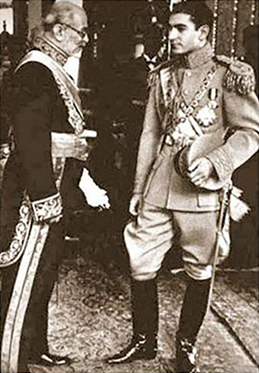
British and Soviet authorities limited the constitutional government’s functions but permitted Reza Shah’s son, Crown Prince Mohammad Reza Pahlavi, to ascend the throne on September 16, 1941.
In 1942, the United States, an ally of Britain and the Soviet Union during the war, sent military forces to Iran to help maintain and operate sections of the railroad. And in the same year, Britain and the Soviet Union pledged to respect Iran’s independence and withdraw within six months after the war’s end. This commitment was later reaffirmed by three occupying powers at the Tehran Conference in 1943. However, in 1945 the Soviet Union delayed and refused to provide a timetable for withdrawing from northwestern provinces of East Azerbaijan and West Azerbaijan, where pro-Soviet autonomous movements had emerged. The crisis ended in 1946 with Soviet Union withdrawal, but tensions continued for several months. This episode became one of the first major confrontations of the emerging Cold War, the postwar rivalry between the United States and the Soviet Union.
During this period, Iran’s political environment became more open. Political parties reemerged, and the 1944 Majlis elections were the first genuinely competitive in over two decades. Foreign policy remained a sensitive issue for all parties. The Anglo-Iranian Oil Company, AIOC, owned by the British government, continued to dominate production and profits. Oil nationalization became a powerful political issue, largely because the British-controlled oil industry paid Iran only a small share of the profits, fueling widespread nationalist resentment. When Mohammad Reza Shah replaced his father on September 16, 1941, he intended to continue his father’s reform policies, and vowed to act as a constitutional monarch who would defer to parliamentary authority, he increasingly involved himself in government affairs and opposed or undermined strong prime ministers. Prone to indecision, he often relied more on political maneuvering than decisive leadership. He focused on strengthening the army and ensuring it remained under royal control as the monarchy’s primary power base.

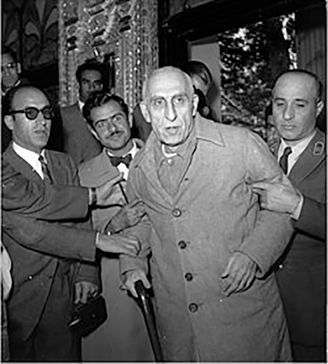
In 1949, an assassination attempt on the Shah, attributed to the pro-Soviet Tudeh Party, led to the banning of that party and an expansion of the Shah’s constitutional powers. However, a political struggle developed between the young Shah and nationalist leader Mohammad Mosaddeq for control of the government. In 1951, Mosaddeq became prime minister and nationalized the Anglo-Iranian Oil Company, asserting Iranian sovereignty over its resources. Britain imposed sanctions and sought international pressure against Iran.
In 1953, amid Cold War anxieties, a coup d’état, orchestrated by British intelligence and the U.S. Central Intelligence Agency, overthrew the democratically elected Prime Minister Mosaddeq and strengthened the Shah’s authority. The coup marked a turning point, strengthening U.S.-Iranian relations but generating long-term resentment among the vast majority of Iranians.
Following the 1953 coup, Mohammad Reza Shah consolidated power, and in the context of regional instability and the Cold War, he positioned himself as a key ally of the West. Domestically, he promoted reform policies that culminated in the 1963 program known as the White Revolution, which included land reform, extension of suffrage to women, formation of the Literacy Corps, nationalization of forests and pastureland, profit-sharing for industrial workers, and privatization of state-owned enterprises.
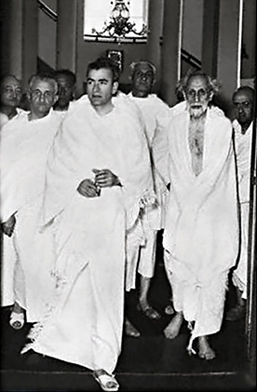
Although these reforms were intended to promote modernization and social equity, they disrupted traditional landholding patterns and provoked opposition from religious leaders who feared losing influence and traditional authority. Among the most outspoken critics was Ayatollah Ruhollah Khomeini, who condemned the Shah’s secular policies and his close ties to the United States. On June 3, 1963, Ayatollah Khomeini delivered a sermon at the Feyziyeh School in Qom, where he denounced the Shah, comparing him to a tyrant, and criticized aspects of the reforms, particularly their secular orientation and perceived alignment with Western interests. Two day later Khomeini was arrested by the security forces. Subsequently, protests sparked across Iran, in Qom, Tehran, Mashhad, Shiraz, against Shah. The government responded with force: troops, tanks, and shoot-to-kill orders were used to suppress demonstrations. Urbanization accelerated, educational access expanded, and new middle classes emerged. However, the combination of rapid social transformation, uneven development, and restricted political participation structurally intensified discontent among educated youth. The Shah’s regime suppressed and marginalized its opponents with the help of Iran’s security and intelligence organization, SAVAK, Sazman-e Ettelaat va Amniyat-e Keshvar. The political repression, censorship, and the absence of meaningful representative institutions undermined regime legitimacy
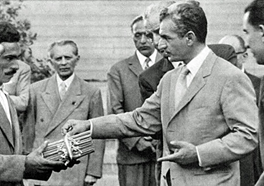
During the Cold War, the shah positioned Iran as a strategic ally of the United States and a pillar of regional stability in the Persian Gulf. Iran joined Western-backed security arrangements. In 1967, the shah crowned himself Shahanshah, “King of Kings,” and his wife, Farah Diba, as Shahbanu, Empress, which caused discontent among various segments of society. These measures, along with the increasing arbitrariness of the Shah’s rule, students and intellectuals seeking democratic reforms. Critics accused the Shah of violating the constitution, which limited royal power and provided for representative government, and of being subservient to the United States. Seeing himself as heir to the kings of ancient Iran, he held an extravagant but controversial celebration in 1971 marking 2,500 years of Persian monarchy.
The Shah pursued discreet yet substantive diplomatic relations with Israel. Relations between the two countries were strengthened through security cooperation, with Israel providing assistance and training to SAVAK in exchange for Iranian oil. At the same time, the Shah sought to expand Iran’s regional influence by cultivating closer relations with Arab states. During the 1973 Arab–Israeli War, the Shah allowed Soviet aircraft to pass through Iranian airspace to deliver military supplies to Egypt, and Iran provided financial and oil support to Egypt. After Arab–Israeli War of 1973, he adopted a more publicly pro-Arab posture, endorsing calls for Israeli withdrawal from occupied territories and expressing support for Arab political positions. Although Iran maintained economic and intelligence ties with Israel, this recalibration of policy contributed to a gradual cooling of Iran–Israel relations. The Shah aimed to position Iran as a dominant Persian Gulf power while avoiding diplomatic isolation in the Arab world. He supported the idea that Israel should return occupied territories to the Palestinians. In a 1973 interview with Oriana Fallaci, the Shah expressed his view that Israel’s occupation of Arab and Palestinian lands was unlawful. In 1974, in an interview with Mike Wallace, he criticized the influence of the US-Jewish lobby, AIPAC, on American politicians and lawmakers. He repeated similar criticisms in another interview in 1976. The Shah’s criticism of Israel and AIPAC made him a less favorable partner for the United States and Israel in the Middle East.
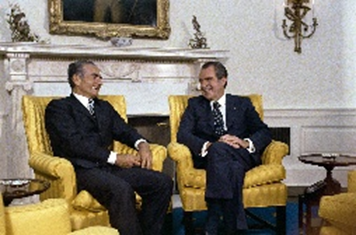
After the 1973 oil price shock, Iran experienced an unprecedented increase in oil export earnings. The oil boom increased liquidity in the Iranian economy at a rate that far outpaced the capacity of other sectors to absorb it. The government’s budget became heavily reliant on oil revenues, which financed expansive state investment programs, rising military expenditures, and a dramatic increase in public consumption. Because fiscal planning mechanisms were not designed to manage such large fluctuations in oil income, state spending expanded rapidly in response to revenue flows, under the direct direction of the Shah.
In 1976, he replaced the Islamic calendar with an “imperial” calendar beginning with the foundation of the Persian Empire more than 25 centuries earlier. These actions were widely viewed as anti-Islamic and intensified religious opposition.
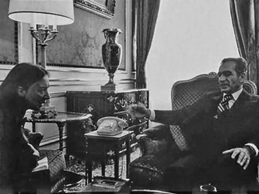
Italian journalist Oriana Fallaci interviews Mohammad Reza Shah, Tehran 1973.
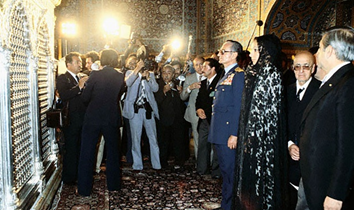
By the mid-1970s, the Shah ruled amid widespread discontent caused by the regime’s repression, socioeconomic changes that benefited some classes at the expense of others, and the widening gap between the ruling elite and the general population. Economic strains, including inflation, uneven wealth distribution, and pressures associated with rapid development, combined with political grievances and cultural tensions to create a broad coalition of religious leaders, secular intellectuals, bazaar merchants, students, and workers mobilized against the monarchy. From 1978 onward, widespread uprisings, nationwide protests and strikes intensified. Despite attempts at reform and conciliation, the regime’s authority eroded. Islamic leaders, particularly the exiled cleric Ayatollah Khomeini, were able to channel this discontent through a populist ideology rooted in Islamic principles and calls for the overthrow of the Shah
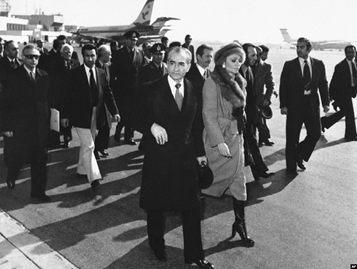
As a consequence of the Shah’s position on the Arab–Israeli War and his views on the Palestinian-occupied territories, during the uprisings of 1978 and the Revolution of 1979, the United States gradually distanced itself from the Shah and began exploring channels of communication with Ayatollah Khomeini as a potential future leader of Iran, seeking to safeguard American and Israeli interests and maintain regional stability. In January 1979, the Shah left Iran. In February 1979, Ayatollah Khomeini returned from exile, and the Shah’s government collapsed and the Pahlavi dynasty was replaced by the Islamic Republic of Iran under the leadership of Ayatollah Khomeini, fundamentally reshaping Iran’s political and social order.
Bibliography
Abrahamian, Ervand. Iran Between Two Revolutions. Princeton University Press, 1982.
Abrahamian, Ervand. The Coup: 1953, the CIA, and the Roots of Modern U.S.-Iranian Relations. The New Press, 2013.
Abrahamian, Ervand. A History of Modern Iran. Cambridge University Press, 2018.
Cronin, Stephanie, ed. The Making of Modern Iran: State and Society under Riza Shah, 1921–1941. Routledge, 2003.
Gasiorowski, Mark J., and Malcolm Byrne, eds. Mohammad Mosaddeq and the 1953 Coup in Iran. Syracuse University Press, 2004.
Kapuściński, Ryszard. Shah of Shahs. Harcourt Brace Jovanovich, 1982.
Katouzian, Homa. The Persians: Ancient, Mediaeval and Modern Iran. Yale University Press, 2009.
Milani, Abbas. The Shah. Palgrave Macmillan, 2012. Pahlavi, Mohammad Reza Shah. Answer to History. Stein and Day, 1980